
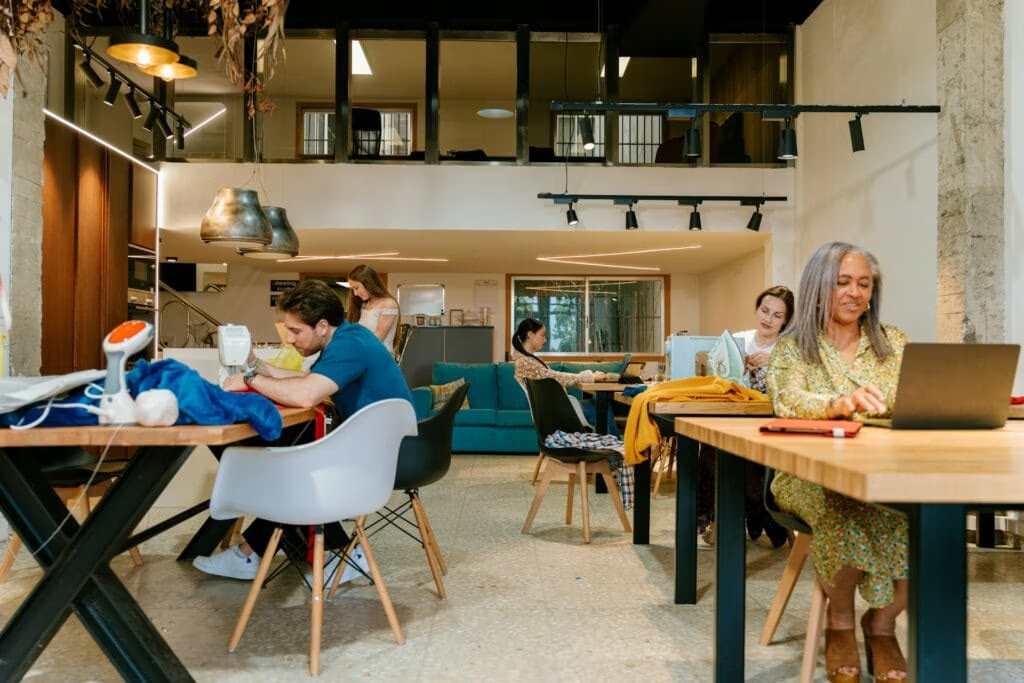
Flexible working has shifted from a trend to a standard way of thinking about the work week. Many of us no longer follow a strict clock-in, clock-out schedule, and our spaces have to move with that. Coworking space providers play a key role in how flexible routines take shape. We’re not just hosting desks, we’re shaping environments that match changing habits.
As spring picks up across the UK, longer daylight hours and lighter mornings make people use space differently. Some show up earlier, ride waves of natural light, or prefer more movement through the day. These seasonal transitions remind us that flexibility in working isn’t only about where work gets done, it’s just as much about when and how.
Designing for Shift-Ready Schedules
When people work at different hours, space use shifts too. Early birds may want access before most arrive. Others may prefer a slow start and a longer evening. Our job is to make all of that possible without chaos.
We focus on flow more than fixed hours. That means:
- Open access that’s secure but doesn’t demand everyone show up at once.
- Desks and zones that feel useful at any point in the day.
- Lighting that works well early or late without feeling draining.
People need room to move through their own rhythms. We don’t just ask when someone works best, we shape the setup so every part of the day feels supported.
At The Workers’ League, part-time office plans and all-day passes provide members with 24/7 access to flexible meeting rooms, quiet booths, spacious hot desk zones, and communal kitchens stocked with organic teas and bean coffee across all locations.
Balancing Private and Shared Space
People come to shared spaces for connection, but they stay when they can still focus. We aim to make the private feel personal without taking away the shared energy around it.
We do this by:
- Building in soft barriers that dull sound but don’t block light.
- Using smart furniture that shifts with the task, not just the space.
- Keeping calm corners tucked into wider open areas, never too far or too boxed in.
We’ve seen that even a small quiet spot near shared zones can become someone’s go-to if it’s laid out right. The balance isn’t about making things fully silent or fully social, but giving people room to choose what works that day.
All our clubs offer private phone booths, open-plan zones, and snug lounge areas for solo concentration or casual teamwork, allowing members to match their need for quiet and collaboration throughout each day.
Providing for People, Not Just Tasks
A space isn’t just about what someone needs to get done, it has to make them feel ready to get started. We watch what people reach for, where they pause, and what they avoid. These clues shape how we plan the next step.
That could mean:
- Letting people choose whether they work near light, plants, or open air.
- Breaking up the day with soft social breaks instead of stiff meetings.
- Creating flow through scent, airflow, and volume more than strict boundaries.
It’s not about adding more features, but about helping people reset, settle, and refocus over and over in small ways. Mental clarity often builds from details, not distractions.
Flexible Solutions Without Losing Structure
Even in a space built around flexibility, we need direction. Too much guesswork makes people stall. We’ve learned that structure can be gentle, but still firm enough to keep the setup working for everyone.
So, we rely on a few simple systems:
- Clear booking tools for rooms, without friction.
- Quiet signage that guides without telling.
- Light rules that free up thinking but keep things flowing.
These act as loose rails that let people steer, but keep things from tilting too far off course. We find that when structure shows up at the right moments, it quietly holds plenty of freedom in place.
What Spring Can Teach Us About Change
Early spring is a strong reminder that change doesn’t need to be dramatic to matter. As the weeks stretch out and light begins to pour back in, subtle shifts in how people move through the day start to show up. We see more interest in fresh air, natural light, and parts of the space that felt quiet over winter.
This is the right time to look at what needs tweaking. We rethink layouts more often in spring than any other period, because the season itself invites small shifts. We move furniture to better catch the sun or fresh air, try lighter décor, or refresh corners that went untouched all winter. As people adjust how they’re working, we adjust with them.
Shaping Spaces That Move With You
Flexibility isn’t just about having options, it’s about building spaces that shift with how someone’s day is flowing. That could mean a room going from solo work to group planning mid-morning, or someone swapping bright exposure for a calm corner after lunch. We treat space as a tool, not a backdrop.
Coworking space providers help shape that kind of adaptability. By paying attention to patterns, feedback, use, and ease, we refine rather than fix things. Our goal is to respond, not control.
When we align space with the rhythm of the season and the people inside it, everything runs with less push. Spring reminds us how much better that feels.
Flexibility Designed for the Real Workday
At The Workers’ League, we pay close attention to how different people use space on their own terms, and we know the value of having options that flex with the day. It’s why our workspaces are always set up to support both structure and spontaneity. For those searching for coworking space providers who think beyond the desk and create environments that move with you, we’re here to help. Let’s talk about what kind of setup makes the most sense for your routine. Get in touch and we’ll figure it out together.